
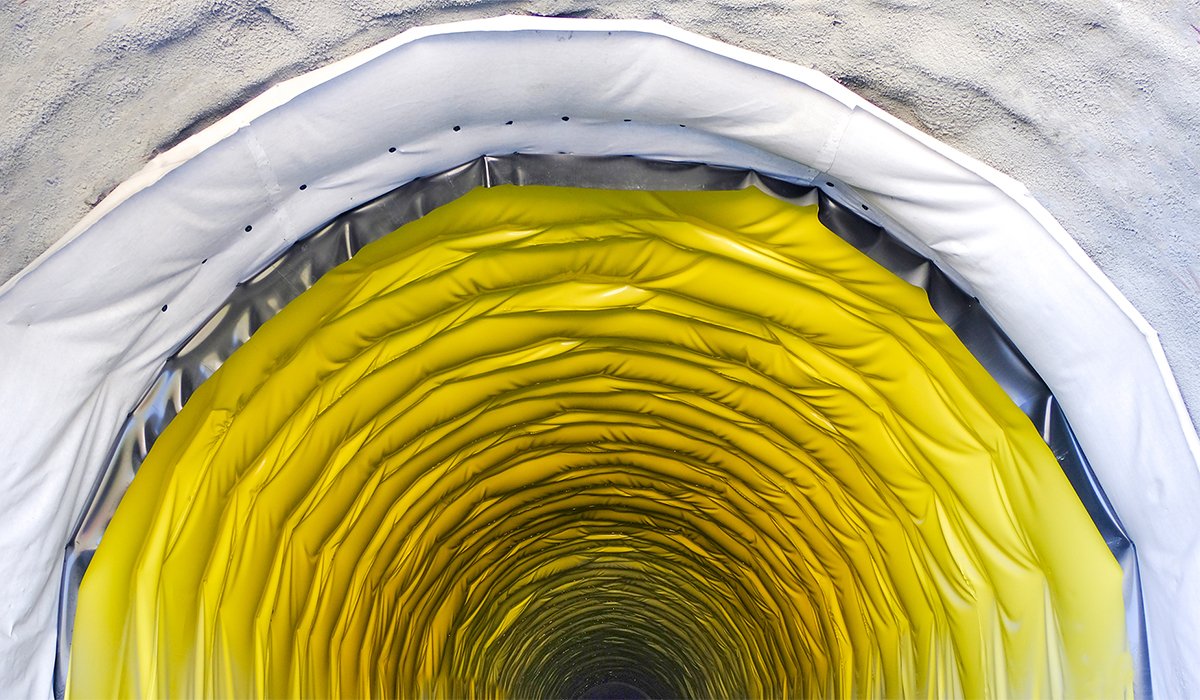
Geotextile Use in Tunnel Waterproofing and the Importance of Correct Geotextile Selection
Waterproofing in tunnel projects is critical for ensuring the long-term durability and safety of the structure. One of the most vital components of this system is geotextile.
Geotextile protects the geomembrane, which provides the impermeability, from external factors, enhancing the durability of the waterproofing system and extending the project's lifespan. However, improper geotextile selection can lead to geomembrane damage and waterproofing failure.
Why is Geotextile Used?
Geotextiles are used in tunnel waterproofing systems for several purposes:
- Protection: Protects the geomembrane from mechanical damage and punctures.
- Filtration and Drainage: Controls water flow and directs water through the bottom drainage pipes.
Polypropylene vs. Polyester Geotextile: Which is the Right Choice for Tunnel Waterproofing?
The geotextile used in tunnel waterproofing must be compatible with concrete and resistant to alkalinity. Therefore, selecting the right geotextile for the project is crucial for long-term, reliable performance.
Polypropylene (PP) Geotextile:
- Can be produced in different length and thickness fibers.
- Provides high strength due to its mechanically bonded fiber structure.
- The product should covers the properties stated in the specification of the Project.
- Alkali-resistant, making it unaffected by contact with concrete.
Polyester (PES) Geotextile:
- Due to the alkalinity of concrete, it deteriorates chemically over time.
- Can be completely degraded by hydrolysis over time.
Consequences of Incorrect Geotextile Selection:
- Mechanical damage and punctures to the geomembrane, leading to waterproofing failure.
- Water leakage causing damage to the concrete structure and reducing its durability.
- Loss of functionality in the waterproofing system over time, resulting in high repair costs.


