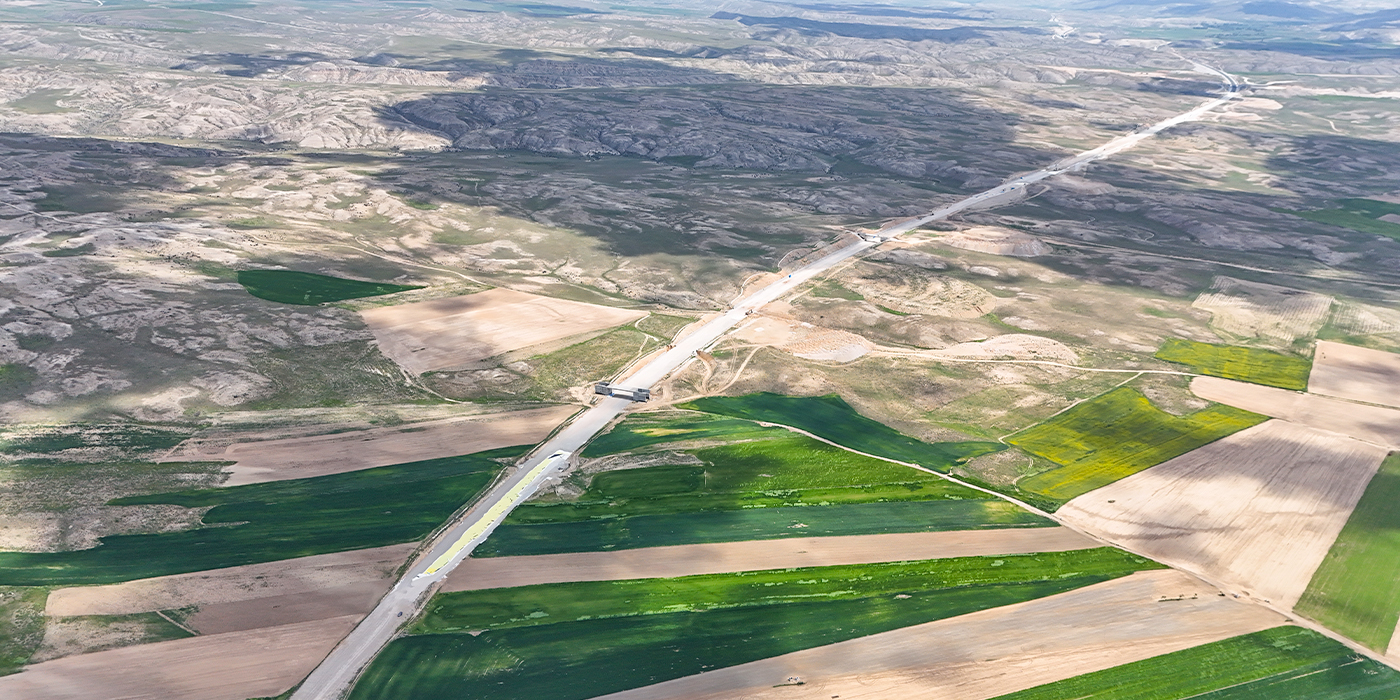
The Ankara - İzmir High-Speed Railway Construction Project is one of Türkiye’s most significant transportation investments, connecting İzmir — the country’s third largest city with strategic importance due to its industry, tourism potential, and port infrastructure — to the capital city Ankara through a high-speed railway network.
Covering the provinces of Manisa, Uşak, and Afyonkarahisar, the project will reduce the existing 824-kilometer railway line to 624 kilometers, while decreasing travel time from approximately 14 hours to 3 hours and 56 minutes.
Including 49 tunnels, 67 viaducts, 421 underpasses/overpasses, 862 bridges and culverts, and 1,399 engineering structures, the project also stands out with its varying ground conditions, advanced engineering requirements, and critical infrastructure details.
Due to the presence of gypsum-based soil formations along certain sections of the route, ensuring long-term slope performance, preventing water contact with the ground structure, maintaining soil stabilization, and preserving waterproofing continuity became critical engineering requirements.
In addition, slope geometries, infrastructure crossings, and application areas requiring special detailing created the need for a combined geosynthetic solution capable of delivering high flexibility, durability, and system integrity.
The gypsum-based ground structure along the project route posed risks of dissolution, volumetric changes, and strength loss upon contact with water. Furthermore, the intense water presence observed in certain sections made the long-term preservation of impermeability on slope surfaces critically important.
In addition, varying slope geometries, infrastructure crossings, and electrical lines required special detailing solutions beyond standard applications. Preserving membrane integrity and ensuring uninterrupted waterproofing continuity, particularly at transition points, became one of the most critical aspects of the application.
In line with all these requirements, a combined geosynthetic system solution capable of simultaneously meeting waterproofing, soil stabilization, protection, and long-term performance criteria was needed.
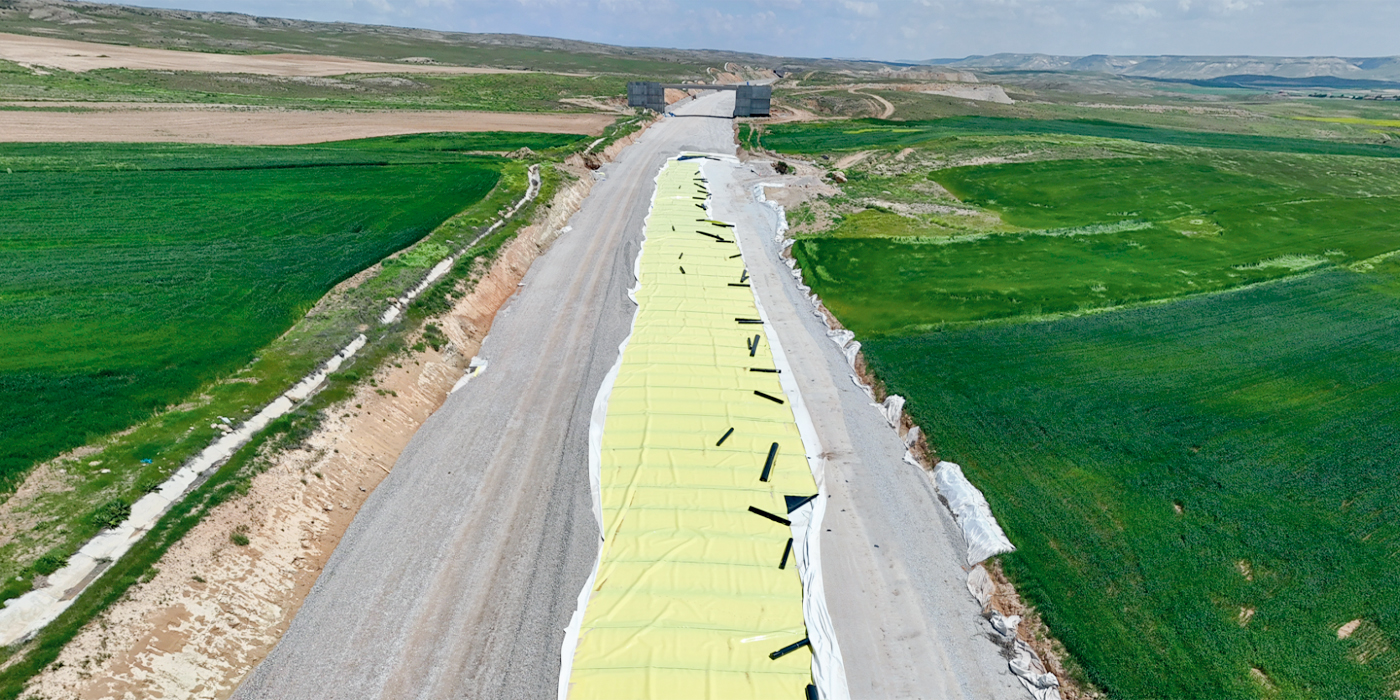
Within the project, a combined geosynthetic system solution was implemented to simultaneously fulfill soil stabilization, waterproofing, and protection functions.
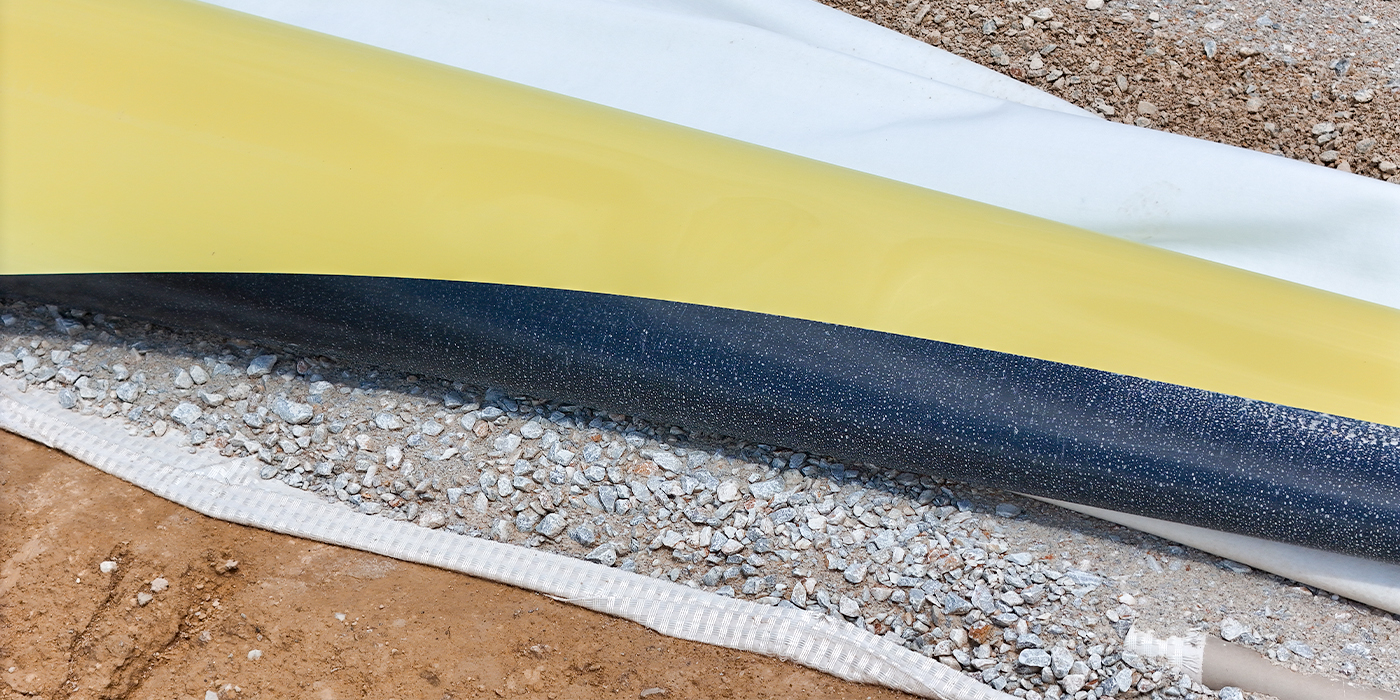
As part of the system, the ForTex Biaxial Geocomposite used in the base stabilization layer enabled reinforcement, separation, and filtration requirements to be met with a single product. Developed for infrastructure applications requiring either biaxial or uniaxial strength performance, the ForTex Geocomposite also provided application efficiency and labor advantages.
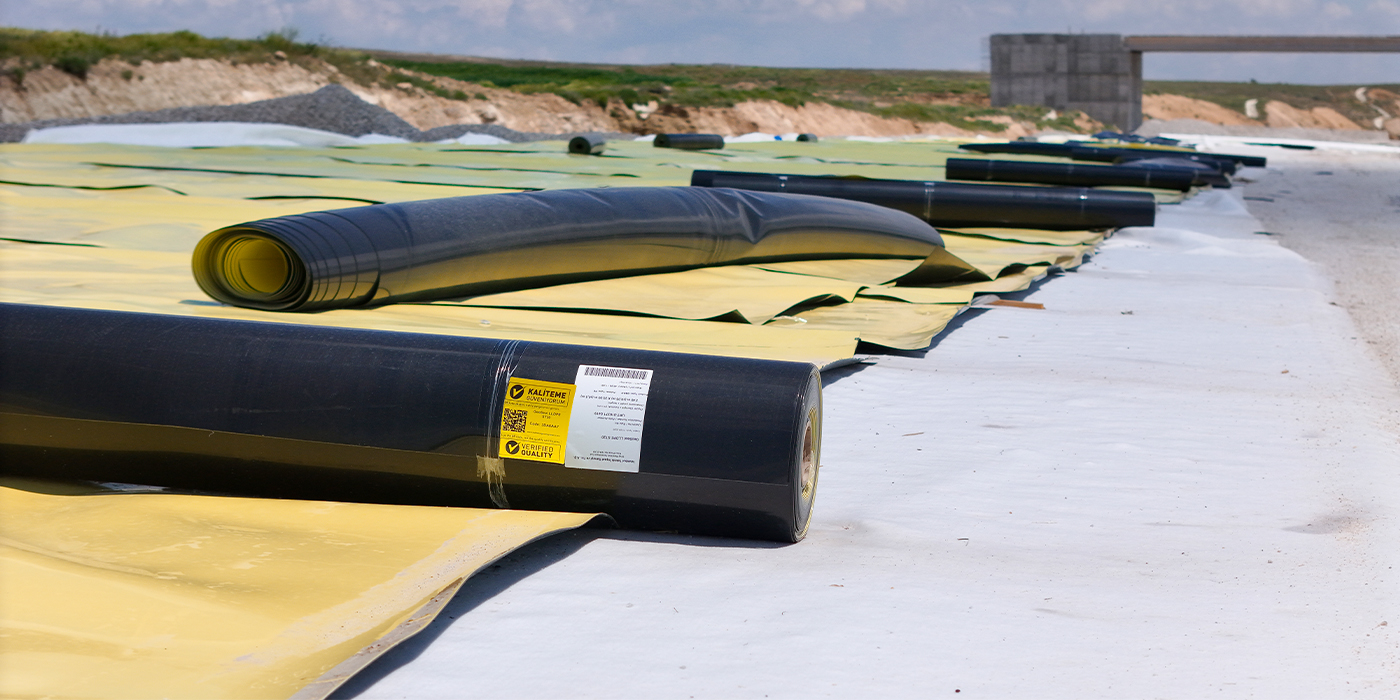
GeoSeal XPol Geomembrane, preferred as the waterproofing layer, created an effective barrier on slope surfaces thanks to its high flexibility and impermeability performance. The geotextile layer installed over the geomembrane protected GeoSeal XPol against external effects, enhancing system durability and long-term performance.
With its LLDPE structure, GeoSeal XPol Geomembrane adapted effectively to varying slope geometries, infrastructure crossings, and special detail points, providing significant advantages during installation. While welded joint details ensured continuous impermeability throughout the membrane system, specially developed solutions at electrical line crossings and transition points maintained system integrity safely and effectively.
Thanks to the implemented combined geosynthetic system, water contact with gypsum-based soil formations was prevented, resulting in a long-lasting infrastructure solution contributing to transportation safety and operational continuity along the high-speed railway line.