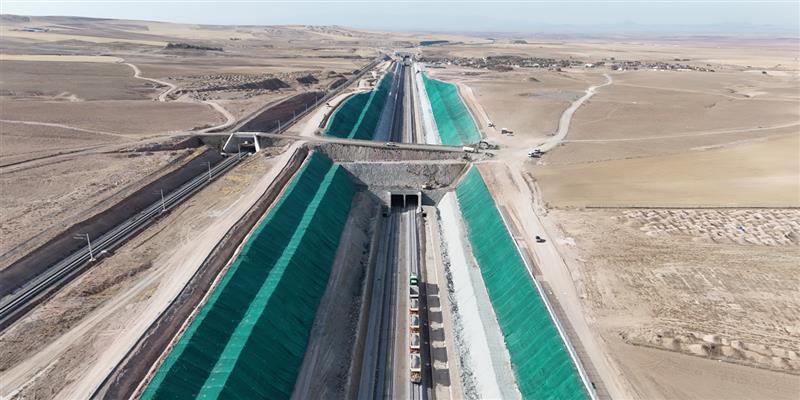
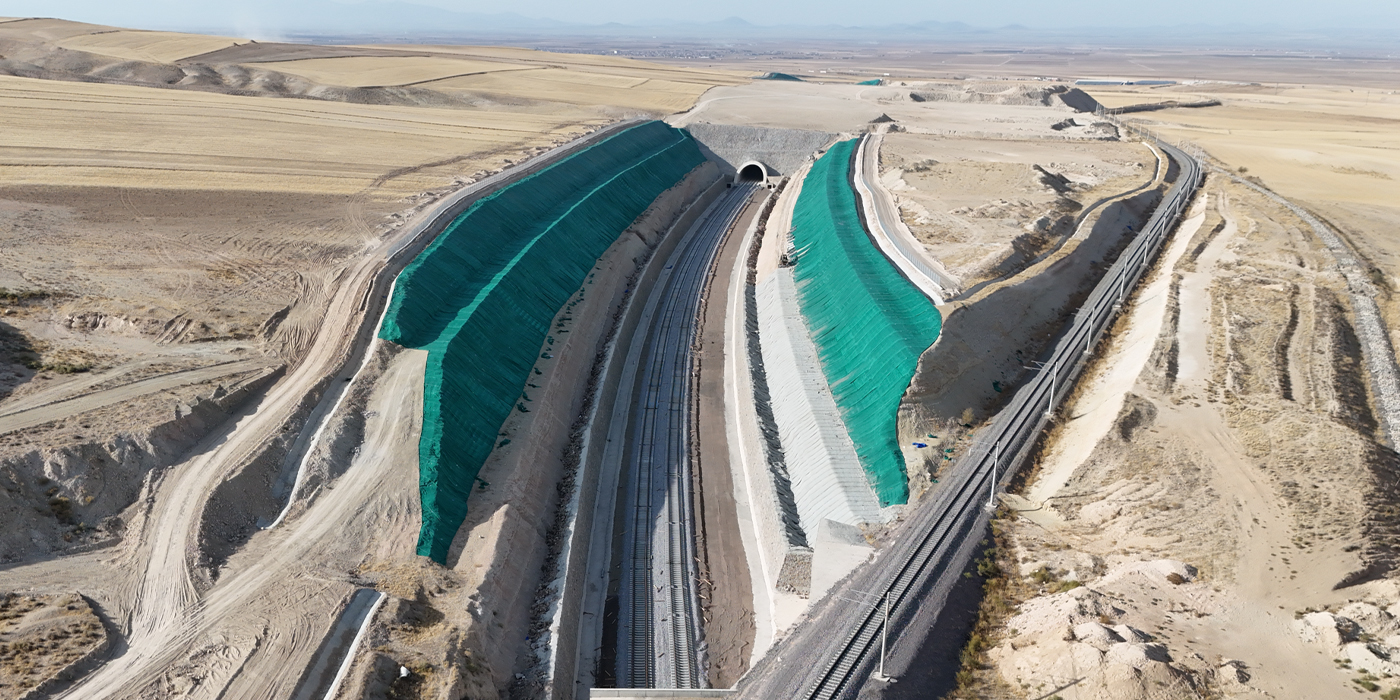
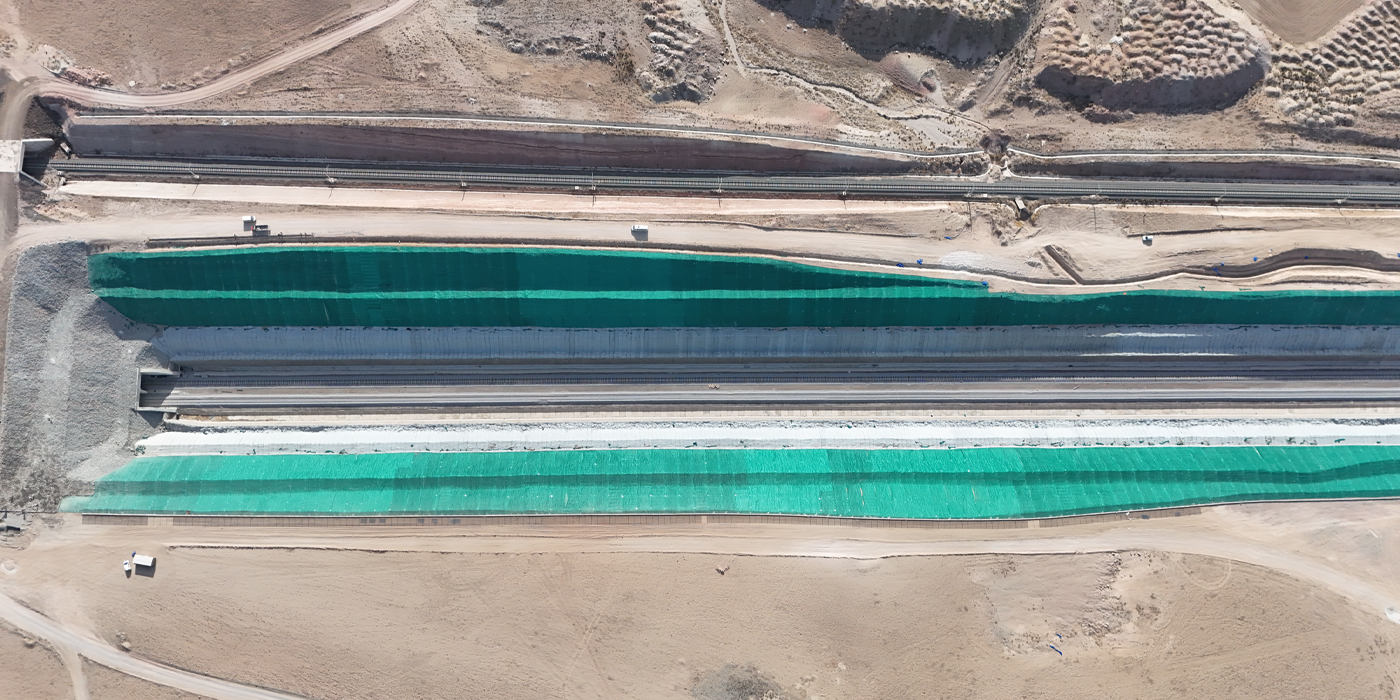
On the slopes along the Karaman–Ulukışla High-Speed Rail Line, environmental conditions such as heavy rainfall, wind effects, and daily temperature fluctuations have caused ongoing erosion. Prolonged exposure of the slope surfaces has weakened their stability and made the effects of erosion increasingly pronounced over time.
This situation highlighted the need for a long-term slope stabilization and erosion control solution to ensure the safe and uninterrupted operation of the rail line.
Prolonged exposure of the slopes resulted in surface degradation due to erosion, altering the original slope geometry and making some sections steeper than initially designed. Additionally, the strong prevailing winds at the project site posed a significant environmental challenge, complicating the stability and feasibility of the protective measures on the slope. These conditions demanded a robust system capable of providing both mechanical strength and reliable surface anchorage.
Solution
To protect the slopes from erosion, Fortex Composite Mat with 60/60 kN tensile strength, UV resistance, surface anchorage, and rope reinforcement was installed. The project covered a total area of 130,000 m².
The technical advantages of FortexMat 60/60 PC Composite Green Mat, combined with the engineering support provided during installation, effectively addressed the challenges encountered on-site:
As a result, the slope surfaces received long-term protection, preventing erosion from potentially disrupting the operation of the rail line.